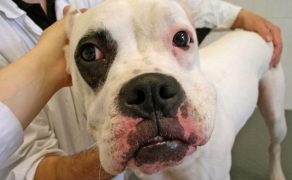
Niepożądane reakcje na pokarm u psów
Piśmiennictwo
- Adamski W., Adamska M.: Alergie pokarmowe psów i kotów. „Med. Wet.”, 1996, 52 (11), 679-682.
- Allen, D.H., Van Nunen S., Loblay R., et al.: Adverse reactions to foods. „The Medical Journal of Australia”, 1984, 141 (5), 37-42.
- Anderson J.A.: The establishment of common language concerning adverse reactions to foods and food additives. „Journal of Allergy and Clinical Immunology”, 1986, 78, 140-144.
- Auci D.L., Chice S.M., Heusser C., Athanassiades T.J., Durkin H.G.: Peyer’s patches and mesenteric lymph nodes are the sites of first appearance of IgE bearing B lymphocytes and hapten specific IgE antibody forming cells in bpo-klh sensitized mice. „Reg Immunol”, 1992, 4 (4), 216-224.
- Baenkler H.W.: Salicylate intolerance. Pathophysiology, clinical spectrum, diagnosis and treatment. „Deutsches Arzteblatt International”, 2008, 105, 137-142.
- Barej W. : Procesy trawienne a alergie pokarmowe. „Med. Wet.”, 1996, 52, 8, 485-489.
- Barker A.K., Stahl C., Ensley S.M., et al.: Tremorgenic mycotoxicosis in dogs. „Compendium: Continuing Education for Veterinarians”, 2013, 35, E1-E6.
- Barrett J.S., Gibson P.R.: Fermentable oligosaccharides, disaccharides, monosaccharides and polyols (FODMAPs) and nonallergic food intolerance: FODMAPs or food chemicals? „Therapeutic Advances in Gastroenterology”, 2012, 5, 261-268.
- Bhagat R., Sheikh A.A., Mishra W.A., Maibam U.: Food allergy in canines: A review. „Journal of Entomology and Zoology Studies”, 2017, 5 (6), 1522-1525.
- Campbell A.: Grapes, raisins and sultanas, and other foods toxic to dogs. „UK Vet Companion Animal”, 2007, 12, [...]

Ten materiał dostępny jest tylko dla użytkowników
którzy są subskrybentami naszego portalu.
którzy są subskrybentami naszego portalu.
Wybierz pakiet subskrypcji dla siebie
i ciesz się dostępem do bazy merytorycznej wiedzy!
i ciesz się dostępem do bazy merytorycznej wiedzy!
Masz aktywną subskrypcję?
Nie masz jeszcze konta w serwisie? Dołącz do nas


121
ALGORYTMY
POSTĘPOWANIA
w weterynarii
POSTĘPOWANIA
w weterynarii